My freshman year dorm room was papered in inspirational quotes. I trawled databases of them, cut and pasted relevant ones into a Word doc, changed the font to something scripty, printed out pages and pages and then cut out each saying. I taped most of them to my closet doors. By October, at least a handful would regularly get unstuck and flutter to the floor and I’d have to smooth out the scraps of paper and reaffix them with another loop of tape. No matter how hard I try, I can only recall one of the quotes and none of the specific motivation that led me to decorating my room with them.
Recently, I did an interview for someone’s coaching program. This happens sometimes. What made this one stand out was that the interviewer read me a couple of snippets of old GenMeh blog posts. I found myself surprised to hear words I’d written five years ago, because I don’t remember writing them five years ago and I doubt I’d write them in quite the same way today. I’m sure in the moment they felt genuine and urgent and right, just like it felt genuine, urgent and right to fill my walls with famous quotes meant to enlighten my college years. I was struck by the surety of my point of view. Age and experience, it seems, have brought equivocation or at least a little temperance.
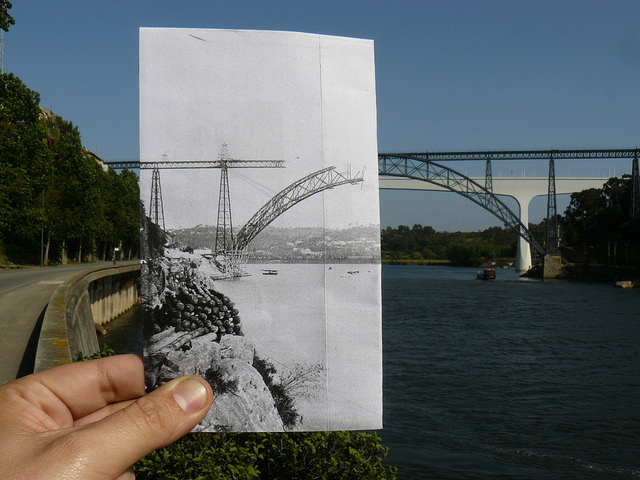
To think about my younger selves is to be filled with a swell of protectiveness and wonder at their vulnerability. Look at this blind newborn kitten, this foal trying to walk for the first time! In some cases, there is still a sense of shame, irrational though it may be. I feel embarrassed for these earnest iterations of myself, for her sense of style, for her black and white thinking, for naiveté that she wore like a cardboard “Kick me” sign. Whether she was 12 or 22, she knew exactly what she wanted because she had no idea how much choice there really is in the world. They’re all me, but also not. They’re stuck in their times and circumstances and I can’t rescue them from their bad hair and misdirected idealism and I can’t figure out how I shucked one self off to become the next. Somehow, the me who got hit by a car in seventh grade became the me who saw the inside of the Sistine Chapel who became the me who moved back in with her parents while unemployed who became the me who gets invited to a White House event. Maybe you need to be ignorant of the process for it to work.
And while I can only remember one quote from the walls of my old dorm room, it sprang to mind this week when I was trying to sound insightful about sentences I’d written half a decade ago:
“The past is a foreign country: they do things differently there.”
Seems as good an explanation as any as to the relationship of the mes of yesteryear to the one of today who wishes she could take them under her wing.
I’ve been packing. Rather, I’ve been thinking about packing. I bought boxes. I put one of them together. I put my printer in it and then promptly forgot about it for a week. I’m in the process of moving (gonna give the west coast a try) and while I don’t have much stuff, I have too much to fit in a suitcase and a carry on. I’ve pared back as much as I can, but I still have enough (extra towels and sheets, my air mattress, a sock monkey) to fill approximately three of the aforementioned boxes. These three boxes have been driving me crazy. I’m leaving my current address two weeks before moving to my new one, so where is my stuff going to live in the interim? Should I send them to my SO’s parents’ house and he’d fetch them over Thanksgiving break? Should I mail the stuff back to my own parents and live without a printer for the interim? Should I find a way to pack a yoga mat and my drying rack in a suitcase? Should I leave money with a friend to ship them to me once I’ve landed? I’ve cycled through multiple complicated options and devoted more thought than any sane person should to what to do with some discount linens from Marshalls.

The only option I hadn’t considered was the simplest. I could ask the person I was renting from if I could send the boxes now and have her put them in a corner of the living room for me. Instead, I was losing sleep and acting like I was trying to import $2M worth of cocaine from Bogota with the DEA watching my every move.
In layman’s terms, Occam’s Razor states that, in the absence of certainty, the simplest explanation should rule. It’s a pretty good approach to solving life problems, too. What’s the easiest solution to your current woes that meets your needs? Start with that option before working your way up to more elaborate fixes. Get headaches when you drink red wine? Instead of testing every varietal on the shelf to see how headache-y each makes you, opt for white instead. Problem solved. Want to lose a few lbs? Instead of joining a $100/month gym or going raw vegan right off the bat, spend a week logging your calories to gauge where you might be able to cut back. In my case, in lieu of stewing over what to do with my stuff, I should simply have sent a four-sentence email to try to solve my problem the easiest way possible. When I finally sacked up and did it, the tenant replied ten minutes later to tell me to go ahead and mail as many boxes as I wanted.
Save time and energy. Start with simple first.
Last week, I had a preliminary interview with a media conglomerate for a role that sounded great on paper. I was a little surprised to get tapped because I don’t have a journalism degree, haven’t interned in a newsroom or paid my dues at The Ortonville Independent or a place like that. I worked my way up through the student journalism ranks in college. I took a little time off from writing to work in international development and have balanced freelancing and corporate work (and now entrepreneurship) for the last five years.
The hiring manager (a senior editor) called back because the HR rep I had spoken to had forgotten to ask me about salary. He said I had a lot of experience and he didn’t want me to get deeper into the hiring process without hearing what the job paid. It wasn’t enough and we both knew it. I thanked him for his transparency and he thanked me for my frankness. I told him I was flattered to have made the shortlist out of the hundreds of applications he received.

Five years ago, I probably would have kept pursuing that job and tried to make the salary work. I would have considered it the break of a lifetime. Now, I’m okay with taking a pass. I’ve built kind of a thing for myself and have capitalized on opportunities that have come my way and I have a good sense of what my work is worth. In letting this one go, I realized that at some point I’ve stopped looking for someone to give me my big break. I’ve stopped believing that the only way I can have more is if someone gives it to me. I’ve stopped looking for a benefactor, a patron, a champion. I’ve accepted, without really realizing it, that if I want more, I can go get it. I have the tools and the knowledge and the experience to figure out how to get more money, more time, more experience, more life for myself and by myself. I don’t need to wait to be chosen and to hand over the power of that choice to others. Life is much more like a lemonade stand than the senior prom.
Recently, someone told me I was a successful adult woman and I deserved to think of myself that way and structure my career accordingly. I was making my life more difficult by denying myself this reality and the things that go with it. “You don’t need to buy a $1500 St. John suit, but you do need to get the USB ports on your Macbook fixed.” was the precise quote. I reminded myself of this after I hung up with the hiring manager. As a resourceful adult, I can afford to pass on opportunities that aren’t right, because I have the ability to create better ones for myself. There is a sense of peace in this thought.
Generation Meh turns five years old this month. I feel like the blog and its author are growing up.
Recently, I tweeted:
“Everyone wants to know how you got from A to B, but they hate it when the answer is “Worked hard and had talent.”
“I COULD give you “five easy steps to get from A to B,” but you’re gonna pitch a fit when step 1 is “Learn how to excel at being a human.”
A couple of months ago, I watched both seasons of The Pickup Artist. I joke about hunting down Mystery and teaming up to do a book on applying PUA wisdom to the corporate world*, but the show actually provided a huge amount of food for thought. You only need to watch a couple of episodes to understand how easily taught self-promotion truly is. Take a room of hapless, dateless schlubs and give them makeovers, a few canned lines and a little training in using and decoding body language. In short order, even the most gun-shy guy among them could stroll into a club and hold a woman’s attention for 3 – 5 minutes. The fly in the ointment was that most of these guys had issues that ran deeper than being nervous around the opposite sex, so while they learned how to promote themselves like pros, they never really worked on becoming the type of well-rounded men women would continue to be interested in or engaged by after their small talk material ran out. That’s the part that doesn’t fit neatly in a 22-minute episode.

Most of us aren’t looking for advice that includes hard work and introspection. We want a list of steps and a guarantee that if we follow them, we’ll get what we want. If you just do these three things, you can lose 20 lbs this month or get a job at Google or attract more women. No one wants to accept that there might not be a shortcut and we might not be able to achieve X, because we lack the requisite skill set or dedication. It’s uncomfortable to look inward and accept that all the tips in the world aren’t going to land us a dream job if we don’t have the qualifications, attitude and work ethic demanded by employers. It’s much easier to focus on how to massage the language of our cover letter than it is to face the fact we have to work harder and get better at our chosen craft in order to make the cut. That’s not fun or sexy or easy like scoring a cell number from a drunk sorority girl.
If you’re not getting the results you want in life, it might not be because you suck at self promotion or lack connections, it might be because you need to work on what it is you’re attempting to promote – yourself.
*Only semi-joking. Mystery should call me.
I spent most of March revising a book proposal after an editor and a literary agent cold-emailed me to ask if I had anything in the works on that front. I dusted off the proposal I wrote in 2010 and never submitted and spent a couple of days wallowing over all the water that’s flowed under my personal bridge since then. That sounds kinda tampon commercial-y doesn’t it? I’ve moved multiple times, ended up in the hospital with mono, got into a relationship, got out of it, met someone else, quit my job, started a business, spoke at NYU, etc. I could see where I was coming from at the time I wrote that proposal, but it isn’t a place I could get back to. The book I wanted to write back then wasn’t something I could see myself writing today, although I’d never trade some of the experiences I sought out as fodder for it (road-tripping across the country, anyone?). I went back to the drawing board. I looked at what I’m known for (analysis related to Millennial culture), what was missing from the current literary landscape on the subject and how my voice (pithy but informed) could fill that gap. The proposal was 17 pages long and extensively footnoted. Pedantry is my hedge against criticism and always has been.

The reception was mixed. One party was enthusiastic and one was ambivalent. The ambivalent one loved my voice, but wanted something bigger and grander and more marketable. What else did I have up my sleeve? she wanted to know. I talked over the feedback with a confidante who urged me to set logic aside and really think about the story or stories I was passionate about telling. If I could write any type of book, what would it be? I thought on this and fired back with my pie-in-the-sky dream projects*. Market trends and pre-existing platforms be damned. It still wasn’t the right fit for this particular contact, but I felt good about putting all my cards on the table.
The thing is, I thought I’d already learned this lesson last summer and learned it the hard way. I thought I’d gotten my head around the fact that you don’t get what you don’t ask for, at least as it related to my personal life. I thought I had well and truly accepted that pragmatism shouldn’t always supplant desire and that not every course of action lends itself to be evaluated with a list of pros and cons. And yet, here I was being schooled all over again.
There is almost five years’ worth of advice on this blog. And despite the fact that a helluva lot has changed since I started writing here and since I drafted that first book proposal, what hasn’t changed is my need to heed my own counsel and the reality that unlike learning to drive or tie your shoes, some lessons don’t stick the first time around.
*If you ask nicely, I might just tell you what they are. Maybe even in fewer than 17 pages.


